All awards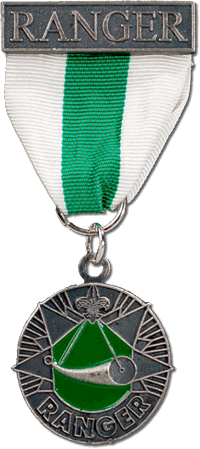
Venturing Ranger Award
Venturing
2025 requirements, effective September 27, 2025
Requirements
1.
Challenging Core Requirements
Complete all 8 of the following Challenging Core Requirements.
Complete all 8 of the following Challenging Core Requirements.
1.
First Aid
a.
Complete a standard first-aid course.
b.
Complete a CPR Course and become CPR certified.
c.
Build a personal first aid kit or help build a group first aid kit.
d.
Explain to your advisor or advisor designee how to use everything in the kit.
e.
Teach another group, Scouting unit, or individual how to make and use a personal or
group first aid kit.
f.
Complete a Wilderness first aid course or an EMT Basic course offered through an online
course, local hospital, college, or first aid crew.
g.
Research careers in first aid-related fields and how one becomes a professional in each
area, including education requirements, examples of careers, and what a typical day
looks like.
2.
Wilderness Survival
a.
Talk with your advisor or designee and write a risk management plan for an
up-and-coming crew outdoor campout or high adventure activity. The plan should
include nutrition, health, first aid, supervision, insurance, safety rules and regulations,
proper equipment, maps and compass, in-service training, environmental
considerations, emergency and evacuation procedures, and emergency contacts.
b.
List the survival priorities from memory and explain your use of each in a survival
situation.
c.
Demonstrate points (i) and (ii) below; for point (iii), explain how to prepare a group for
evacuation from a threat and provide appropriate Scouts to carry out the evacuation:
i.
Emergency signals used in the outdoors
ii.
Search-and-rescue patterns
iii.
Evacuation procedures and value of when to move and when not to move in a
wilderness emergency.
d.
Write a report outlining the following environmental exposure problems. Discuss what
causes them, signs and signals, and treatment.
i. Hypothermia
ii. Frostbite
iii. Sunburn
iv. Heat exhaustion
v. Heat cramps
vi. Heatstroke
i. Hypothermia
ii. Frostbite
iii. Sunburn
iv. Heat exhaustion
v. Heat cramps
vi. Heatstroke
e.
Hydration
i.
Explain dehydration and the necessity of conserving fluids in a survival situation.
ii.
Explain at least four methods of obtaining water in the outdoors, and
demonstrate at least two ways to treat that water.
f.
Fire-making.
i.
Demonstrate at least two different fire lays:
one for cooking and one for
warmth.
ii.
Learn and discuss the use of fire starters, tinder, kindling, softwoods, and
hardwoods in fire-making.
iii.
Explain the importance of minimizing fire impacts and how you minimized them.
g.
Weather
i.
Explain how you can understand and predict weather patterns using winds,
barometric pressure, air masses, and their movements, clouds, and other
indicators that can be used to predict weather patterns.
h.
Knots and Lashing
i.
Explain the different rope materials and thicknesses that are best for wilderness
use and how to care for them.
ii.
Demonstrate how to tie the following knots and lashings: sheet bend,
fishermans knot, bowline, bowline on a bight, two half hitches, clove hitch,
timber hitch, taut-line hitch, square lashing, shear lashing, figure 8, and diagonal
lashing.
iii.
Explain the use of each of the above knots and how they can be helpful in the
wilderness.
i.
Food
i.
Explain the usefulness and drawbacks of obtaining food in the wilderness, including things to avoid.
ii.
Prepare and eat at least one meal with food you have found outdoors.
j.
Survival Kit
i.
Make a list of items you would include in a wilderness survival kit. Using that list, make a wilderness survival kit. Explain the use of each item you have included.
ii.
Using that survival kit, demonstrate how to build a wilderness survival kit to a fellow crew member.
k.
Leave No Trace - Learn the Leave No Trace Seven Principles before your wilderness outpost campout and apply each principle on your outings.
l.
Wilderness outpost camp
i.
Set up a wilderness survival outpost camp and spend at least two nights and two days at your site.
ii.
Know how to plan a wilderness shelter for three different environments and then build one that fits your current environment.
iii.
Use and demonstrate several knots and lashings from requirement 7(h) in building your wilderness survival campsite.
iv.
While at the wilderness outpost campout, make at least 1 campfire and treat water for consumption using the methods that you have learned.
m.
Take a requirement from this focus area and teach that skill to a group of people who will benefit from learning that skill.
3.
Conservation
a.
Research the importance of local and/or regional conservation projects/efforts in your area and why they are essential. Put your findings together in a short presentation, video, or written document and present to your advisor or advisor designee or another group, Scouting unit, or individual.
b.
Research the importance of local or state specific endangered species and why they are essential to their ecosystems. Brainstorm how we can preserve that species. Put your findings together in a short presentation, video, or written document and present them to your advisor or advisor designee and another group, Scouting unit, or individual.
c.
Find a local conservation organization or agency and interview an employee about what their organization does. How do they encourage people to get excited about conservation? How does the organization help local communities and wildlands? What personally got them interested in a conservation related career?
d.
Participate in a conservation project. Examples include a Distinguished Conservation Service Award, participating in a Summit Rank, or an Eagle Scout service project that is related to conservation. You can also participate in a conservation project with another organization, group, or club. Discuss with your advisor or advisor designee why the project was important and what it accomplished. (Note: The Scouting America Conservation Handbook is a great resource for planning and completing conservation projects)
e.
Review your experience completing this focus area with your advisor or advisor designee. What did you learn? What did you find challenging, and how did you grow from completing this experience? Do you have any career interests in this field? What interests you or disinterests you?
4.
Communication
a.
Do one of the following: (i), (ii), or (iii)
Complete 1 of the following
i.
Take a communications related training class that includes at least 15 hours of training. This could be a non required course at school, such as creative writing, technical writing, American Sign Language, or film production. It could also be a commercial course such as speed reading or effective presentations.
or
Attend one Scouting America training such as NYLT, NAYLE, OA NLS, or Wood Badge.
or
Attend one Scouting America training such as NYLT, NAYLE, OA NLS, or Wood Badge.
ii.
Actively participate in a communications related club or organization for at least three months. Participate in at least three organizational activities where you practice or improve your communication skills. Examples include Toastmasters, debate clubs, Moot court or trial advocacy programs, Model United Nations, and drama clubs.
or
Staff one Scouting America training such as NYLT, NAYLE, OA NLS, or Wood Badge.
or
Staff one Scouting America training such as NYLT, NAYLE, OA NLS, or Wood Badge.
iii.
Read at least two books approved by your advisor or advisor designee on a communications subject of interest to you. Write or give a report to your crew on the important communications principles you learned and how you think you can apply these principles to improve your communications.
b.
Please do one of the following: (i), (ii), or (iii). Before you begin, have your advisor or advisor designee approve your plan.
Complete 1 of the following
i.
Oral Skills:
Prepare and present an oral presentation about an outdoor skill or area you are interested in for your crew, other Scouting unit, or another group.
Prepare and present an oral presentation about an outdoor skill or area you are interested in for your crew, other Scouting unit, or another group.
ii.
Audio Visual Skills:
i. Prepare and present an audio/video presentation relating to an outdoor skill or area you are interested in for your crew or another group, as approved by your advisor or advisor designee.
i. Prepare and present an audio/video presentation relating to an outdoor skill or area you are interested in for your crew or another group, as approved by your advisor or advisor designee.
iii.
Written Skills:
Prepare a written pamphlet, set of instructions, or description and summary. It should be at least 1,000 words and describe your chosen subject completely. Include pictures, charts, and/or diagrams to communicate your topic better. Have two people, one with expertise in the area you are presenting and one without expertise, read and critique your work. Make improvements to your draft based on their input. If your work applies to your crew, such as caving skills, then share your work with your crew.
Prepare a written pamphlet, set of instructions, or description and summary. It should be at least 1,000 words and describe your chosen subject completely. Include pictures, charts, and/or diagrams to communicate your topic better. Have two people, one with expertise in the area you are presenting and one without expertise, read and critique your work. Make improvements to your draft based on their input. If your work applies to your crew, such as caving skills, then share your work with your crew.
c.
Review your experience completing this focus area with your advisor or advisor designee. What did you learn? What did you find challenging, and how did you grow from completing this experience? What careers are in this field, and is there any career interest in this field? What interests you or disinterests you?
5.
Emergency Preparedness
Complete the First Aid Ranger Award core requirement before beginning this requirement.
Complete the First Aid Ranger Award core requirement before beginning this requirement.
a.
Complete an emergency preparedness course (such as the Red Cross) either in person or online that your advisor or advisor designee approves. Earn a certificate of completion or certification. Many colleges, local organizations, and national emergency preparedness organizations offer such courses.
b.
Discuss at least 5 potential emergencies that could arise while outdoors. How would you work to prevent and protect yourself from and mitigate these emergencies? How would you respond to each emergency, and what time of recovery may be for injury?
c.
Show three ways you can signal the need for rescue assistance outdoors.
d.
Show how you can safely and properly remove an injured person from a remote outdoor location.
e.
Discuss potential disasters and emergency preparedness with your family, and then set up a family emergency plan.
f.
Build or refresh a family emergency kit.
g.
Identify at least one emergency preparedness organization or group from your local area and at least one national government agency that would prepare for and handle emergency service. Tell a little about each role in an emergency and the services they offer.
h.
Take a requirement from this focus area and teach that skill to a group of people who will benefit from learning that skill.
6.
Physical Fitness
a.
Make an appointment with your medical professional for a complete physical. Discuss with your doctor that you want to undertake an eight week physical fitness improvement program and ask for suggestions.
b.
Explain at least six principles that guide you in developing a physical fitness program.
c.
Four components of physical fitness are endurance, strength, flexibility, and body composition.
i.
Explain why these components are important to your physical fitness.
ii.
Find a physical fitness professional or expert to administer a fitness test based on these four components. With the help of this expert, set eight week physical fitness goals. The physical education teachers at school should be able to do this test.
d.
Develop an eight week program to accomplish your goals. Use the principles of warm up, cross training, cool down, and regularity.
e.
Learn the basics of a balanced approach to nutrition. Discuss how different types of foods fuel your body and support your fitness journey. Write a menu plan that reflects a balanced diet suitable for your activity level.
f.
Calculate your daily energy needs based on your activity level (e.g., low, moderate, or high). Discuss how your nutritional needs may change depending on your level of physical activity.
g.
Discuss ways to maintain a healthy fitness mindset. Avoid focusing solely on appearance; emphasize feeling strong, energized, and healthy. Understand the importance of setting goals that promote overall well being.
h.
Learn about the risks associated with performance enhancing substances and why a natural approach to fitness is best. Discuss the potential dangers of using substances such as stimulants, steroids, or other unapproved enhancements.
i.
Prevention of injury is important to achieving peak physical performance. Pain is not a normal part of physical development. Soreness and discomfort may be expected, but not pain. Explain how to prevent injury in your fitness program.
j.
Using what you have learned about physical fitness, teach your crew, a Cub Scout, or Scouts BSA Troop, or another group about setting up a physical fitness program.
7.
Land Navigation
a.
Using a topographical map for your area or the area you will be navigating in, demonstrate that you know the following map symbols:
i.
Index contour; vertical control station; hard surface, heavy duty road; railroad, single track; power transmission line; building; checked spot elevation; marsh; map scale; intermittent stream; depression; ridge; trail; stream; hard surface, medium duty road; bridge; cemetery; campsite; water well or spring; unimproved dirt road.
ii.
Explain contour lines. You should be able to tell the contour interval for your map and show the difference between a steep and a gentle slope.
iii.
Using a map and compass, navigate an orienteering course with at least six legs covering at least 2.5 miles.
iv.
Learn to use a global positioning system (GPS) receiver. Demonstrate that you can find a fixed coordinate or geocache at night using a GPS receiver.
v.
Lead a group of 3 to 5 people in finding 5 geocaches near you. Before leading that group, discuss how the Leave No Trace Seven Principles apply to Geocaching.
1.
Do both of the following
a.
Create a geocache and register it online with a national geocaching organization such as geocaching.com
b.
Document your experience making and hiding a cache via written word or social media.
2.
Teach the navigating skills you have learned to your crew, another crew, a Cub Scout Pack, a Scouts BSA Troop, or another group. Show them how to use a compass and a GPS and how to read a topographic map.
8.
Outdoor Ethics
a
Recite and explain the Outdoor Code.
b.
Recite and explain the Leave No Trace Seven Principles.
c.
Complete the Leave No Trace 101 course online.
d.
Complete the online Leave No Trace Backcountry Course
e.
Complete a Leave No Trace training event led by a Leave No Trace Level 1 or 2 Instructor.
f.
Recite and explain the principles of Tread Lightly!.
g.
Complete the Tread Lightly! Online Awareness Course )
h.
Take a requirement from this focus area and teach that skill to a group of people who will benefit from learning that skill.
2.
Outdoor Preservation
Ranger candidates must complete 1 of the following Outdoor Preservation requirements.
Ranger candidates must complete 1 of the following Outdoor Preservation requirements.
Complete 1 of the following
1.
Outdoor Living History
Complete Requirements a and b together
Complete Requirements a and b together
a
Research a historical culture and time period of interest to you, such as Native American, mountain man, pioneer, or Revolutionary/Civil War. Include areas such as Housing, Food, Religious Practices, Societal development, and End of Culture (if applicable)
b.
Do two of the following:
Complete 2 of the following
i.
Prepare two traditional meals from your chosen period and share them with your crew.
ii.
Create a model of the housing that people used during this time period.
iii.
Learn, practice, and share two cultural activities (game, dance, song, skill [like flint knapping], poem, etc.) and share with other
iv.
Write an essay about the culture of this time, including topics such as Music, Customs, etc.
v.
Create a video or presentation outlining what you learned.
c.
Using your research, make an outfit representing a person or type of person (soldier, farmer, trader, hunter, etc.) from your chosen culture.
d.
Using your research, construct a working tool out of authentic materials that would have been used by the person you have chosen to represent in requirement (c) above.
e.
Attend and watch a pow wow, rendezvous, reenactment, historical trek, or another event that includes your chosen culture.
f.
Present your chosen culture to your crew, another crew, a Cub Scout Pack, a Scouts BSA Troop, or another group.
g.
Tour
i.
Organize a group tour to a museum, archaeological dig, or another site of significance to your chosen culture.
ii.
After the tour, lead your group to discuss what they learned.
h.
Research careers in outdoor living history or history related fields, including an interview with a historian or related field; discover how one becomes a professional in each area, including education requirements, examples of careers, and what a typical day looks like.
i.
Do one of the following
Complete 1 of the following
i.
Find a local organization or historical society that preserves a historical location. Talk with someone from that organization about what it does, how it engages with the community, and how people can get involved. Make an example presentation or series of media posts that the organization could use to promote its work.
ii.
Research careers such as historians, anthropologists, and archeologists. Learn how one becomes a professional in each area, including education requirements, examples of careers, and what a typical day looks like.
2.
Ecology
a.
Explain the basic natural systems, cycles, and changes over time and how they are evidenced in a watershed near your home. Include the four basic elements, land use patterns, and at least six different species in your analysis and how they or their populations have changed over time. Discuss both biological and physical components.
b.
Describe at least four environmental study areas near where you live. Include the reasons for selecting these areas, their boundaries, user groups, past inventories, any outside forces that interact with them, and a list of what things could be studied at each of them.
c.
Plan a field trip to the above areas, including detailed plans for conducting various investigations. Follow all requirements, such as obtaining any required permits, completing safety and transportation plans, outlining equipment needs, etc.
d.
Do the following:
i.
Under the guidance of a natural resources professional, investigate an ecological subject approved by your advisor or advisor designee. Inventory and map the area. Conduct a detailed investigation, providing specific data for a specific topic.
ii.
Document and present your findings to your crew, a Cub Scout Pack, a Scouts BSA Troop, or another group.
e.
Teach your presentation audience how to carry out an ecological investigation. Use the steps in the requirements (b) and (c) above with the group so that they may also learn by doing.
f.
Research careers in ecology or ecology related fields, including an interview with a natural resource professional; discover how one becomes a professional in each area, including education requirements, examples of careers, and what a typical day looks like.
3.
Plants and Wildlife
a.
Research a plant or wildlife species considered a keystone species to its environment.
Write about its impact from various perspectives, including its problems, why it is a
keystone species, its relevance to humans, and how it can be managed, conserved, or
enhanced.
b.
Select an area in your backyard where you can study the plants and wildlife that live
there.
i.
Identify 10 plants and animals that live or migrate through your backyard.
ii.
Observe this area thoroughly through various seasons and conditions.
iii.
Study the history of your area or city, paying particular attention to how it has
changed over time, ownership, land use patterns, and landform and climatic
changes.
c.
Make a hypothesis about interactions between a species and its environment and share
it with your crew;
i.
How the population of the species changes with conditions or outside
influences;
ii.
the degree to which the environment provided food, shelter, materials, and
protection for each species; population trends;
iii.
your predictions on the future of these species;
iv.
suggested practices to manage the population and how you would monitor the
effectiveness of these management practices.
d.
Species study: Study a specific plant or wildlife species approved by your advisor or
advisor designee that can be found in several different areas. Observe this species
thoroughly in various areas and seasons of the year. Study the history of this species,
paying particular attention to how it has adapted over time.
e.
Make a presentation on this species; any reactions to changes in conditions or outside
influences; this species ' needs for food, soil, shelter, materials, protection, assistance
with propagation, etc.; population trends; your prediction for the future of this species;
suggested actions to manage the population; and the investigation methods you used.
f.
Earn the Conservation Good Turn Award
g.
Review your experience completing this focus area with your advisor or advisor
designee. What did you learn? What did you find challenging, and how did you grow
from completing this experience? Is there any career interest in this field? What
interests you or disinterests you?
h.
Discuss the Leave No Trace principle of Respect Wildlife with your advisor or advisor
designee.
3.
Outdoor Skills
Ranger candidates must complete 2 of the following Outdoor Skills requirements.
Ranger candidates must complete 2 of the following Outdoor Skills requirements.
Complete 2 of the following
1.
Leave No Trace
a.
Complete a Leave No Trace Skills Course or a Leave No Trace Level 1 Instructor Course.
b.
In a media presentation, compare and contrast how the Leave No Trace principles differ depending on the ecosystem in which you are camping or traveling.
c.
Compare and contrast in a media presentation how the Leave No Trace principles differ based on different outdoor recreational activities (i.e., rock climbing, horseback riding, mountain biking, etc.)
d.
Compare and contrast in a media presentation how the Leave No Trace principles differ based on frontcountry camping vs backcountry camping.
e.
Lead an educational program on the Leave No Trace Seven Principles.
2.
Exploration
a.
Undertake an expedition of five continuous days with a minimum of 5 additional participants and a minimum traveling time of 20 hours over the 5 days by foot, cycle, horse, canoe, or boat to a place you or your team have never visited. Travel time to the site of the trek may not be included as part of the five days.
b.
Your unit should make a plan and presentation that shows competence in the following areas, led by you: navigation skills, expedition cooking, Leave no Trace, language (if visiting another country), fitness, proficiency in the mode of travel, team building, and First Aid.
c.
A budget should be prepared, reviewed, and approved by an advisor or advisor designee.
d.
Keep a logbook of the expedition, which records places visited, the route taken, project work undertaken, and personal thoughts
e.
Complete one service project selected by the team undertaken during the expedition. Discuss what worked, what didn't work, and what you would do differently on the next trip. Ideally, this should be within 24 hours of the 5th day of the expedition or 24 hours of return.
f.
Research and practice the Leave No Trace Seven Principles related to your exploration activity before you leave, and discuss how you utilized these skills during your presentation.
g.
Make a media presentation of your experience and travels.
3.
Outdoor Cooking
a.
Discuss the potential hazards and injuries that could arise while cooking and what you can do to help treat, react to, and minimize possible injuries. Ensure to include the potential concerns of cooking outdoors or on the trail.
b.
Discuss the importance of the following items:
i. Proper food storage and handling for outdoor cooking.
ii. Proper food cooking for outdoor cooking.
iii. Food allergies, dietary restrictions, and how to properly handle and prepare food to avoid cross contamination.
iv. Food related illnesses and how to prevent/treat them.
v. Reading food labels for nutritional information, serving sizes, and content information.
i. Proper food storage and handling for outdoor cooking.
ii. Proper food cooking for outdoor cooking.
iii. Food allergies, dietary restrictions, and how to properly handle and prepare food to avoid cross contamination.
iv. Food related illnesses and how to prevent/treat them.
v. Reading food labels for nutritional information, serving sizes, and content information.
c.
Review the following items with your advisor or advisor designee:
i. The USDA MyPlate
ii. Serving sizes and daily intake
iii. Recommended daily calorie intake
iv. How physical activities affect the food plate and serving sizes.
i. The USDA MyPlate
ii. Serving sizes and daily intake
iii. Recommended daily calorie intake
iv. How physical activities affect the food plate and serving sizes.
d.
Discuss and learn about the different methods of outdoor cooking listed below, the equipment needed for each, different options to maintain temperature control, and proper handling/safety:
i.
Fire/coals
1. Open flame
2. Coals
3. Foil cooking
1. Open flame
2. Coals
3. Foil cooking
ii.
Charcoal
1. Grill
2. Dutch oven
1. Grill
2. Dutch oven
iii.
Stove
1. Camp stove
2. Backpacking stove
1. Camp stove
2. Backpacking stove
e.
Plan a menu and purchase the food for at least five people for a two night campout with at least three meals. Consider any special dietary restrictions or allergies.
f.
Create a shopping list based on the menu you created in requirement 3 (e). The list should show each item, the amount you need to serve the group, and the cost. Then, go shopping for the items on your list.
g.
On the campout in requirement 3 (e) above, cook the three meals using at least two different cooking methods you discussed in requirement 3 (d). Time your cooking so that all items are served at the same time.
h.
Demonstrate that you can prepare a meal for 2 or more people (including you) using the following methods:
i. Backpacking stove
ii. Dutch oven
iii. Fire/coals
***This requirement cannot be completed simultaneously as requirement 3 (g). Separate meals will need to be prepared on a different outing. The three cooking methods do not need to be completed simultaneously and can be done over separate meals on separate outings if desired.
i. Backpacking stove
ii. Dutch oven
iii. Fire/coals
***This requirement cannot be completed simultaneously as requirement 3 (g). Separate meals will need to be prepared on a different outing. The three cooking methods do not need to be completed simultaneously and can be done over separate meals on separate outings if desired.
i.
i. Discuss the following:
i. Leave no Trace Seven Principles and How it relates to Outdoor Cooking
ii. How to properly clean equipment, utensils, and the campsite after cooking
iii. How to properly dispose of dish water and garbage
i. Leave no Trace Seven Principles and How it relates to Outdoor Cooking
ii. How to properly clean equipment, utensils, and the campsite after cooking
iii. How to properly dispose of dish water and garbage
j.
Take a requirement from this focus area and teach that skill to a group of people who
will benefit from learning that skill.
4.
Lifesaving
Obtain approval from your advisor or advisor designee or designated counselor, and afterward, provide a brief report on your experiences, highlighting any challenges faced and how they were overcome.
Obtain approval from your advisor or advisor designee or designated counselor, and afterward, provide a brief report on your experiences, highlighting any challenges faced and how they were overcome.
a.
Complete American Red Cross Lifeguarding training, including the Waterfront Skills module or equivalent recognized by your state legislation or regulation. Serve as a lifeguard during a Scouting America unit swim.
b.
Apply your training to teach swimming to one or more Scout aged youth.
c.
Serve as a lifeguard during two Scouting focused events, ensuring the safety and well being of participants while demonstrating proficiency in water rescue techniques.
4.
Outdoor Sports
Ranger candidates must complete 1 of the following of the Outdoor Sports requirements.
Ranger candidates must complete 1 of the following of the Outdoor Sports requirements.
Complete 1 of the following
1.
Backpacking
a.
Develop a written backpacking exercise plan and follow it for at least three months, exercising thrice a week. Keep a daily journal.
b.
Plan Ahead and Prepare
i. Tell how you would minimize risk on a backpacking trek. Upon your return from your backpacking trip, discuss with your advisor or advisor designee what worked and didn 't work with your plan.
ii. Explain the purpose of an emergency response plan.
iii. Learn about different ways to set up a campsite on a backpacking trip.
i. Tell how you would minimize risk on a backpacking trek. Upon your return from your backpacking trip, discuss with your advisor or advisor designee what worked and didn 't work with your plan.
ii. Explain the purpose of an emergency response plan.
iii. Learn about different ways to set up a campsite on a backpacking trip.
c.
Health and first aid
i. Learn and demonstrate trail health considerations and typical backpacking injuries such as hypothermia, frostbite, heat exhaustion, heat stroke, altitude sickness, dehydration, blisters, stings and bites, sprains, and how to avoid and treat these injuries and illnesses.
ii. Because fluid intake is so important to a backpacker, tell and then take care of your water supply on a backpacking trip. Include ways of treating water and why that is important.
i. Learn and demonstrate trail health considerations and typical backpacking injuries such as hypothermia, frostbite, heat exhaustion, heat stroke, altitude sickness, dehydration, blisters, stings and bites, sprains, and how to avoid and treat these injuries and illnesses.
ii. Because fluid intake is so important to a backpacker, tell and then take care of your water supply on a backpacking trip. Include ways of treating water and why that is important.
d.
Backpacks
i. Try on three types of backpacks. Learn how to choose the proper size frame for your body size. Learn and then be able to explain to others the difference between a frameless pack, an internal frame pack, and an external frame pack. Tell the pros and cons of each type and what kind of trek you would take with each pack.
ii. Explain the different parts of a backpack and their uses.
iii. Learn the proper way to lift and carry your backpack.
iv. Describe at least four ways to limit weight and bulk in your backpack without jeopardizing your health and safety.
v. Learn how you would load an internal frame pack versus one with an external frame.
i. Try on three types of backpacks. Learn how to choose the proper size frame for your body size. Learn and then be able to explain to others the difference between a frameless pack, an internal frame pack, and an external frame pack. Tell the pros and cons of each type and what kind of trek you would take with each pack.
ii. Explain the different parts of a backpack and their uses.
iii. Learn the proper way to lift and carry your backpack.
iv. Describe at least four ways to limit weight and bulk in your backpack without jeopardizing your health and safety.
v. Learn how you would load an internal frame pack versus one with an external frame.
e.
Outerwear
i. Demonstrate proper backpacking clothing in wet, hot, and cold environments. Explain the choices you made
ii. Demonstrate proper footwear, socks, and foot care. Explain why you made these selections.
iii. Demonstrate at least three uses for a poncho in backpacking.
i. Demonstrate proper backpacking clothing in wet, hot, and cold environments. Explain the choices you made
ii. Demonstrate proper footwear, socks, and foot care. Explain why you made these selections.
iii. Demonstrate at least three uses for a poncho in backpacking.
f.
Cooking
i. List at least 20 items of group backpacking gear. Include a group cleanup kit.
ii. Learn and then demonstrate how to cook a meal using a backpacking stove.
iii. Demonstrate proper sanitation of backpacking cooking gear. iv. Learn how to pack and carry a backpacking stove and fuel properly.
i. List at least 20 items of group backpacking gear. Include a group cleanup kit.
ii. Learn and then demonstrate how to cook a meal using a backpacking stove.
iii. Demonstrate proper sanitation of backpacking cooking gear. iv. Learn how to pack and carry a backpacking stove and fuel properly.
g.
Environmental Impact
i. List at least 10 critical environmental considerations for backpacking and describe ways to lessen their ecological impact.
ii. Considering the Leave No Trace Seven principles, tell how to dispose of the human waste, liquid waste, and garbage you generate on a backpacking trip.
i. List at least 10 critical environmental considerations for backpacking and describe ways to lessen their ecological impact.
ii. Considering the Leave No Trace Seven principles, tell how to dispose of the human waste, liquid waste, and garbage you generate on a backpacking trip.
h.
Packing gear.
i. Pack your backpack with your gear, including outdoor essentials, additional gear, and personal extras. Pack like you were sharing equipment with one other person for a three day, two night backpacking trip.
ii. List at least 10 items essential for an overnight backpacking trek and explain why each item is necessary.
iii. Present yourself to an experienced backpacker, unload your pack, have them critique your packing, and then repack your pack. Have them critique your efforts.
i. Pack your backpack with your gear, including outdoor essentials, additional gear, and personal extras. Pack like you were sharing equipment with one other person for a three day, two night backpacking trip.
ii. List at least 10 items essential for an overnight backpacking trek and explain why each item is necessary.
iii. Present yourself to an experienced backpacker, unload your pack, have them critique your packing, and then repack your pack. Have them critique your efforts.
i.
Three backpacking treks (These treks are in addition to the expedition completed in Exploration elective.)
Complete the following in compliance with youth protection guidelines:
Complete the following in compliance with youth protection guidelines:
1.
Trek 1: participate in a backpacking trek of at least two nights, covering a distance of at least ten miles
2.
Trek 2: participate in a backpacking trek of at least two nights, covering a distance of at least fifteen miles
3.
Trek 3: Participate in a backpacking trek of at least three nights, covering a distance of at least twenty miles.
j.
Do the following:
i. Plan and lead a backpacking trek; this may be one of the treks in requirement I. This group can be your crew, another crew, or a Scouts BSA troop.
ii. Plan the balanced and nutritious menu appropriate for this trek.
iii. Secure needed permits and use them to prepare a trip plan to be left with your family and participants. Include emergency points of contact.
iv. Using the map you used to chart your course, brief the crew you lead on your trip plan.
v. Lead a shakedown training event for trek participants.
i. Plan and lead a backpacking trek; this may be one of the treks in requirement I. This group can be your crew, another crew, or a Scouts BSA troop.
ii. Plan the balanced and nutritious menu appropriate for this trek.
iii. Secure needed permits and use them to prepare a trip plan to be left with your family and participants. Include emergency points of contact.
iv. Using the map you used to chart your course, brief the crew you lead on your trip plan.
v. Lead a shakedown training event for trek participants.
k.
Take a requirement from this focus area and teach that skill to a Troop or relevant community organization that will benefit from learning it.
2.
Cave Exploring
a.
Research the National Speleological Society (NSS) and identify information about the
organization of caves and caverns near you.
b.
Safety
i. Review the Guide to Safe Scouting Sections on Caving, and make a presentation to share with your crew about Scouting America's do's and don'ts on cave exploring.
ii. Learn about the different types of caves and caverns and the different ways to traverse them.
i. Review the Guide to Safe Scouting Sections on Caving, and make a presentation to share with your crew about Scouting America's do's and don'ts on cave exploring.
ii. Learn about the different types of caves and caverns and the different ways to traverse them.
c.
Knots
i.
Learn the following knots used in vertical caving:
Endline knots: Bowline, Figure eight, Figure eight on a bight. Midline knots: Bowline on a bight, Butterfly. Joiner knots: Water knot, Fisherman, Figure eight on a bend. Ascending knots: Prusik knot.
Endline knots: Bowline, Figure eight, Figure eight on a bight. Midline knots: Bowline on a bight, Butterfly. Joiner knots: Water knot, Fisherman, Figure eight on a bend. Ascending knots: Prusik knot.
ii.
Teach these knots to your crew, another crew, a Cub Scout Pack, a Scouts BSA
Troop, or another group.
d.
Ropes
i. Learn about the different types of ropes available for climbing and vertical caving and explain the uses of each and their characteristics of each.
ii. Learn proper climbing rope care. Know and practice proper coding and storage.
iii. Learn how to keep proper records of climbing rope and inspect it for wear and damage. Also, know when to retire a rope.
i. Learn about the different types of ropes available for climbing and vertical caving and explain the uses of each and their characteristics of each.
ii. Learn proper climbing rope care. Know and practice proper coding and storage.
iii. Learn how to keep proper records of climbing rope and inspect it for wear and damage. Also, know when to retire a rope.
e.
Rappelling and belaying
i.
Demonstrate that you know how to properly and safely rappel a distance of at
least 30 feet.
ii.
Demonstrate that you can ascend a rope using mechanical ascenders, Prusik, or
other ascending knots. Ascend at least 30 feet.
iii.
Know and explain the differences, advantages, and disadvantages of single rope
(SRT) and double rope (DRT) for rappelling and belaying.
f.
Outfitting
i. Visit a sporting goods store or NSS affiliated organization and observe a presentation where you can learn about personal caving gear, including helmets, light sources, backup lighting sources, clothing, boots, cave packs, etc.
ii. Find out what the American National Standards Institute requirements are for helmets.
i. Visit a sporting goods store or NSS affiliated organization and observe a presentation where you can learn about personal caving gear, including helmets, light sources, backup lighting sources, clothing, boots, cave packs, etc.
ii. Find out what the American National Standards Institute requirements are for helmets.
g.
First aid
i. Make a list of what you need in your personal cave pack. Include your personal first aid kit and cave survival gear.
ii. Learn crew equipment, including a first aid kit, caving ropes, and ascending equipment.
iii. Help make a first aid kit for your crew or group and demonstrate that you can keep it up.
iv. Demonstrate to your crew, another crew, a Cub Scout Pack, a Scouts BSA Troop, or another group how to construct both a personal and crew first aid kit.
i. Make a list of what you need in your personal cave pack. Include your personal first aid kit and cave survival gear.
ii. Learn crew equipment, including a first aid kit, caving ropes, and ascending equipment.
iii. Help make a first aid kit for your crew or group and demonstrate that you can keep it up.
iv. Demonstrate to your crew, another crew, a Cub Scout Pack, a Scouts BSA Troop, or another group how to construct both a personal and crew first aid kit.
h.
Caves
i. Learn about the many types of cave formations.
ii. Write a report and submit it to your advisor or advisor designee, or give a presentation on cave formations and caving conservation for your crew, another crew, a Cub Scout Pack, a Scouts BSA Troop, or another group. Include practices such as proper carbide removal, care of walls, ceilings, and formations, and the seven principles of Leave No Trace.
i. Learn about the many types of cave formations.
ii. Write a report and submit it to your advisor or advisor designee, or give a presentation on cave formations and caving conservation for your crew, another crew, a Cub Scout Pack, a Scouts BSA Troop, or another group. Include practices such as proper carbide removal, care of walls, ceilings, and formations, and the seven principles of Leave No Trace.
i.
Find a cave you would like to visit, get permission to enter it, make a trip plan including the cave location, a list of participants, expected time in the cave, expected date and time of return, and emergency contact, and then go in the cave, led by a qualified caver.
j.
Learn from a cave expert about natural and fabricated hazards such as mudslides, loose rocks, pits, deep water, critters, complex routes, wooden ladders, and flooding.
k.
Maps
Using a three dimensional cave map, learn what the standard map symbols represent.
Using a three dimensional cave map, learn what the standard map symbols represent.
l.
People Based Experiences
Think back to one of the requirements of this elective that would be challenging for someone who is differently abled. Think, analyze, explain, and analyze how they can still perform those requirements' functions. Reflect on how one could raise awareness for disabled persons in this activity.
Think back to one of the requirements of this elective that would be challenging for someone who is differently abled. Think, analyze, explain, and analyze how they can still perform those requirements' functions. Reflect on how one could raise awareness for disabled persons in this activity.
3.
Cycling
a.
Types of cycling.
i. Describe the difference between cycling, touring, mountain biking, and bikepacking.
ii. Identify the difference between road biking and mountain biking.
i. Describe the difference between cycling, touring, mountain biking, and bikepacking.
ii. Identify the difference between road biking and mountain biking.
b.
Laws and safety
i. Know the laws governing biking in your state.
ii. Learn and know bicycle safety rules and gear for your preferred type of biking.
iii. Using the knowledge you have gained, give a presentation and safe biking session to your or another Scouting unit, another group, or a community youth group at a school or club.
iv. Explain what using the buddy system would look like for cycling and what technology could aid it.
v. Demonstrate proper first aid for the following:
1. Head Injury
2. Broken bone
3. Road Rash
i. Know the laws governing biking in your state.
ii. Learn and know bicycle safety rules and gear for your preferred type of biking.
iii. Using the knowledge you have gained, give a presentation and safe biking session to your or another Scouting unit, another group, or a community youth group at a school or club.
iv. Explain what using the buddy system would look like for cycling and what technology could aid it.
v. Demonstrate proper first aid for the following:
1. Head Injury
2. Broken bone
3. Road Rash
c.
Rules and environmental impact.
i. Learn the cycling rules and regulations for various types of cycling, including mountain biking and touring, as stated by organizations such as the International Mountain Bicycling Association (IMBA), USA Cycling, the U.S. Forest Service, and other relevant authorities.
ii. Describe the essential environmental considerations for mountain biking and touring cycling, and identify ways to minimize their ecological impact.
i. Learn the cycling rules and regulations for various types of cycling, including mountain biking and touring, as stated by organizations such as the International Mountain Bicycling Association (IMBA), USA Cycling, the U.S. Forest Service, and other relevant authorities.
ii. Describe the essential environmental considerations for mountain biking and touring cycling, and identify ways to minimize their ecological impact.
d.
Maintenance checklist and journal.
i. Establish a maintenance checklist that needs to be reviewed before each trip. Include the SAFE Checklist for Bicycle Safety from the Guide to Safe Scouting.
ii. Make and keep a personal biking journal and record information on at least three trips.
i. Establish a maintenance checklist that needs to be reviewed before each trip. Include the SAFE Checklist for Bicycle Safety from the Guide to Safe Scouting.
ii. Make and keep a personal biking journal and record information on at least three trips.
e.
Repair kit.
i. Buy or build a bike tool and repair kit.
ii. Show you know how to use each tool in the kit.
iii. Write instructions for some of the two basic repairs that could be needed for your bike specifically. For example, you could repair a flat tire, properly adjust your seat and handlebars, repair a broken chain, and show how to temporarily repair a buckled wheel.
i. Buy or build a bike tool and repair kit.
ii. Show you know how to use each tool in the kit.
iii. Write instructions for some of the two basic repairs that could be needed for your bike specifically. For example, you could repair a flat tire, properly adjust your seat and handlebars, repair a broken chain, and show how to temporarily repair a buckled wheel.
f.
Bike trail project
i. Plan and lead a one day bike trail or road maintenance project with the property owner's or land manager's approval.
ii. Make a social media post about your project, including what you did, who it benefited from, and what you learned from completing it. Share with your advisor or advisor designee.
i. Plan and lead a one day bike trail or road maintenance project with the property owner's or land manager's approval.
ii. Make a social media post about your project, including what you did, who it benefited from, and what you learned from completing it. Share with your advisor or advisor designee.
g.
Cycling trips
i. Take at least eight road cycling trips 20 miles long, eight mountain biking trips 10 miles long, or a combination of both 20 mile road cycling and 10 mile mountain biking trips totaling 8 separate trips.
ii. Keep a personal journal of your eight trips, noting routes covered, weather conditions, sketches, maps, and sights seen. Also, note significant things along the trails, such as trail markers, downhills, climbs, rocks, drops, log hops, and portages.
iii. Explain how you used the Leave No Trace Seven Principles during your rides.
i. Take at least eight road cycling trips 20 miles long, eight mountain biking trips 10 miles long, or a combination of both 20 mile road cycling and 10 mile mountain biking trips totaling 8 separate trips.
ii. Keep a personal journal of your eight trips, noting routes covered, weather conditions, sketches, maps, and sights seen. Also, note significant things along the trails, such as trail markers, downhills, climbs, rocks, drops, log hops, and portages.
iii. Explain how you used the Leave No Trace Seven Principles during your rides.
h.
In addition to the trips in requirement g, plan and do a multi day road cycling trip of 50 miles or a mountain bike trip of 30 miles. Your trip plan should include routes, food, proper clothing, and safety considerations record in your journal.
i.
People Based Experiences
Think back to one of the requirements of this elective that would be challenging for someone who is differently abled. Think, analyze, explain, and analyze how they can still perform those requirements' functions. Reflect on how one could raise awareness for disabled persons in this activity.
Think back to one of the requirements of this elective that would be challenging for someone who is differently abled. Think, analyze, explain, and analyze how they can still perform those requirements' functions. Reflect on how one could raise awareness for disabled persons in this activity.
j.
Review your experience completing this focus area with your advisor or advisor designee. What did you learn? What did you find challenging, and how did you grow from completing this experience? Is there any career interest in this field? What interests you or disinterests you?
4.
Equestrian
a.
Explain the characteristics of each of the three distinct American riding styles.
b.
Explain the equipment you would use, including parts of the saddle and bridle, for your preferred style (one of three styles in requirement a).
c.
Explain the difference between natural versus artificial aids used in communicating with your horse, such as using hands, legs, weight, voice, whips, crops, martingales, bits, and auxiliary reins.
d.
Riding attire
Explain the clothing and safety equipment a rider should have for your preferred riding style.
Explain the clothing and safety equipment a rider should have for your preferred riding style.
e.
Horse Care
i. Describe the symptoms of colic. Name and describe four other horse health problems.
ii. Explain what conformation is and why it is important. Explain the difference between lameness and unsoundness.
iii. Explain the importance of hoof care and why a horse might need to wear shoes.
iv. Demonstrate how to groom a horse, including picking hooves and caring for a horse after a ride.
v. Explain how to determine what and how much to feed a horse and why the amount and kind of feed are changed according to the activity level.
i. Describe the symptoms of colic. Name and describe four other horse health problems.
ii. Explain what conformation is and why it is important. Explain the difference between lameness and unsoundness.
iii. Explain the importance of hoof care and why a horse might need to wear shoes.
iv. Demonstrate how to groom a horse, including picking hooves and caring for a horse after a ride.
v. Explain how to determine what and how much to feed a horse and why the amount and kind of feed are changed according to the activity level.
f.
Horse handling
i. Explain how to properly catch, bridle, and saddle a horse.
ii. Demonstrate and explain at least three steps in proper mounting and two ways of dismounting.
i. Explain how to properly catch, bridle, and saddle a horse.
ii. Demonstrate and explain at least three steps in proper mounting and two ways of dismounting.
g.
Stirrup length.
i. Show how to test your correct stirrup length while you are dismounted and when you are mounted.
ii. Explain short stirrup length, medium stirrup length, long stirrup length, and why stirrup length is important.
i. Show how to test your correct stirrup length while you are dismounted and when you are mounted.
ii. Explain short stirrup length, medium stirrup length, long stirrup length, and why stirrup length is important.
h.
Riding position
i. Explain and demonstrate the correct position of your body, feet, hands, arms, and legs while mounted.
ii. Demonstrate how all body parts should be positioned on your horse during a trot, a canter, and a gallop, and explain why this is important.
i. Explain and demonstrate the correct position of your body, feet, hands, arms, and legs while mounted.
ii. Demonstrate how all body parts should be positioned on your horse during a trot, a canter, and a gallop, and explain why this is important.
i.
Describe the patterns that you used to control your horse. On command, be able to slow down, speed up, stop, and back up, and move your horse through its gaits.
j.
Tack and cool down.
i. Properly remove tack from your horse and store it.
ii. Demonstrate proper care of your tack after riding.
iii. Demonstrate proper care for your horse after a ride, including cooling down, brushing, watering, and feeding, and explain why each step is essential.
i. Properly remove tack from your horse and store it.
ii. Demonstrate proper care of your tack after riding.
iii. Demonstrate proper care for your horse after a ride, including cooling down, brushing, watering, and feeding, and explain why each step is essential.
k.
Explain how you use the Leave No Trace Seven Principles and the Tread Lightly! principles when horseback riding.
l.
People Based Experiences
i. Think back to one of the requirements of this elective that would be challenging for someone who is differently abled. Think, analyze, explain, and analyze how they can still perform those requirements' functions. Reflect on how one could raise awareness for disabled persons in this activity.
ii. Research a brief history of this sport or activity and the diversity of people who actively participate in it. Create a timeline of people and important events that celebrate the diversity and cultural impact different groups have had on this area over time.
i. Think back to one of the requirements of this elective that would be challenging for someone who is differently abled. Think, analyze, explain, and analyze how they can still perform those requirements' functions. Reflect on how one could raise awareness for disabled persons in this activity.
ii. Research a brief history of this sport or activity and the diversity of people who actively participate in it. Create a timeline of people and important events that celebrate the diversity and cultural impact different groups have had on this area over time.
m.
Take a requirement from this focus area and teach that skill to a group of people who will benefit from learning that skill.
5.
Fishing
a.
Know your state's freshwater fishing laws, regulations, and license requirements.
b.
Maps
i. Using a map of your state, designate where the different varieties of water are located, such as warm fresh water, cold fresh water (including tail waters), brackish water, and salt water.
ii. On the map, note the most popular game fish found in each spot you marked. On the map, note any protected fish species found in your state.
i. Using a map of your state, designate where the different varieties of water are located, such as warm fresh water, cold fresh water (including tail waters), brackish water, and salt water.
ii. On the map, note the most popular game fish found in each spot you marked. On the map, note any protected fish species found in your state.
c.
Develop a personal ethical code for fishing. List a variety of potential ethical situations where choices may have to be made and describe how you plan to make decisions for those situations.
d.
List at least 10 potential safety situations that you could encounter while fishing in your area and what precautions you should take to protect yourself and your fishing partners. Such as first aid for removing fish hooks from impalements.
e.
For two different species of game fish found in your state, learn where they are in the food chain, the types of waters they can be found in, and the type of underwater structure and temperature they might be most likely to be found in during the fall, winter, spring, and summer. Identify any special habitat requirements for spawning and/or juvenile growth.
f.
Organize and lead a fishing trip or event to introduce other youth to fishing.
g.
Discuss with your advisor or advisor designee how the Leave No Trace Seven Principles apply to fishing.
h.
Provide a review of your experience completing this focus area. What did you learn? What did you find challenging, and how did you grow from completing this experience? Is there any career interest in this field? What interests you or disinterests you?
i.
People Based Experiences
Think back to one of the requirements of this elective that would be challenging for someone who is differently abled. Think, analyze, explain, and analyze how they can still perform those requirements' functions. Reflect on how one could raise awareness for disabled persons in this activity.
Think back to one of the requirements of this elective that would be challenging for someone who is differently abled. Think, analyze, explain, and analyze how they can still perform those requirements' functions. Reflect on how one could raise awareness for disabled persons in this activity.
j.
Pick ONE of the three following options and complete the requirements
Complete 1 of the following
Option A Fresh Water (Spinning, Spin Casting, Bait Casting)
a.
Catching and cooking
i. Catch two fish species using spinning, spin casting, or bait casting outfits.
ii. Learn the proper technique for releasing fish, and release at least one fish, ensuring that it will recover and safely swim away.
iii. Catch another fish, which you will clean and cook. You may eat your fish, but it is not required.
iv. Present your experience releasing fish and cleaning and cooking fish to the youth in your crew, another Scouting unit, or a youth group. Discuss the contrasting experiences.
i. Catch two fish species using spinning, spin casting, or bait casting outfits.
ii. Learn the proper technique for releasing fish, and release at least one fish, ensuring that it will recover and safely swim away.
iii. Catch another fish, which you will clean and cook. You may eat your fish, but it is not required.
iv. Present your experience releasing fish and cleaning and cooking fish to the youth in your crew, another Scouting unit, or a youth group. Discuss the contrasting experiences.
b.
Learn and teach the following to someone else.
i. Explain the difference between a spin casting outfit, a spinning outfit, and a bait casting outfit. Describe the benefits of each type and where and how one might be better for certain fishing situations.
ii. Study and explain how a reel drag should be used. Teach the proper use and function of drag settings.
iii. Teach how to properly play a fish under several situations.
iv. Study and present the use of basic fishing knots, making sure you can teach at a minimum:
1. an improved clinch knot
2. the Palomar knot
3. a Blood knot or Barrel knot
Tie each knot with ease and explain how it is used.
v. Show how to cast two of the three types of outfits. With each, demonstrate two ways to make effective casts using targets. Learn safety measures needed to ensure safe casting.
i. Explain the difference between a spin casting outfit, a spinning outfit, and a bait casting outfit. Describe the benefits of each type and where and how one might be better for certain fishing situations.
ii. Study and explain how a reel drag should be used. Teach the proper use and function of drag settings.
iii. Teach how to properly play a fish under several situations.
iv. Study and present the use of basic fishing knots, making sure you can teach at a minimum:
1. an improved clinch knot
2. the Palomar knot
3. a Blood knot or Barrel knot
Tie each knot with ease and explain how it is used.
v. Show how to cast two of the three types of outfits. With each, demonstrate two ways to make effective casts using targets. Learn safety measures needed to ensure safe casting.
c.
Do ONE of the following:
i. Build a fishing rod of your choice.
ii. Design and make your own fishing lure and explain the fish attracting principle of the lure.
iii. Plan and implement a fishery conservation project with the approval of the proper agency. Contact the local district biologist at your state fish and wildlife agency or visit the Fish and Wildlife Agencies website at fishwildlife.org. Document your project with pictures and/or acknowledgment from the waterway agency.
i. Build a fishing rod of your choice.
ii. Design and make your own fishing lure and explain the fish attracting principle of the lure.
iii. Plan and implement a fishery conservation project with the approval of the proper agency. Contact the local district biologist at your state fish and wildlife agency or visit the Fish and Wildlife Agencies website at fishwildlife.org. Document your project with pictures and/or acknowledgment from the waterway agency.
Option B Fly Fishing
a.
Catching and cooking
i. Catch two different species of fish using a fly fishing outfit.
ii. Learn the proper technique for releasing fish, and release at least one fish, ensuring that it will recover and safely swim away.
iii. Catch another fish, which you will clean and cook. You may eat your fish, but it is not required.
iv. Present your experience releasing fish and cleaning and cooking fish to the youth in your crew, another Scouting unit, or a youth group. Discuss the contrasting experiences.
i. Catch two different species of fish using a fly fishing outfit.
ii. Learn the proper technique for releasing fish, and release at least one fish, ensuring that it will recover and safely swim away.
iii. Catch another fish, which you will clean and cook. You may eat your fish, but it is not required.
iv. Present your experience releasing fish and cleaning and cooking fish to the youth in your crew, another Scouting unit, or a youth group. Discuss the contrasting experiences.
b.
Learn and teach the following to someone else:
i. Explain the differences between a dry fly, wet fly, streamer, nymph, and bass bugs or poppers. Describe the benefits of each type and where and how one might be better for certain fishing situations.
ii. Study and explain how to match rod, reel, line, and leader to develop a balanced outfit. Explain how to select the right outfit for various fishing situations. Understand the makeup of fly lines and teach the advantages of weight forward lines versus double taper lines. Identify and explain the various types of lines and their advantages (floating, sink tip, and sinking lines).
iii. Teach how to properly play a fish under several situations, recognizing that fish exhaustion is critical to catch and release survival.
iv. Study and present the use of basic fishing knots, making sure you can teach at a minimum:
1. an Arbor backing knot,
2. the Pail knot or a tube knot,
3. a Double surgeon 's knot
4. The improved clinch knot
Tie each knot with ease and explain how it is used.
v. Show how to cast. Demonstrate casting skills, explaining proper grip, casting arc, how to load the rod, and how to present the fly. Demonstrate various ways to make effective casts using targets. Learn safety measures needed to ensure safe casting.
i. Explain the differences between a dry fly, wet fly, streamer, nymph, and bass bugs or poppers. Describe the benefits of each type and where and how one might be better for certain fishing situations.
ii. Study and explain how to match rod, reel, line, and leader to develop a balanced outfit. Explain how to select the right outfit for various fishing situations. Understand the makeup of fly lines and teach the advantages of weight forward lines versus double taper lines. Identify and explain the various types of lines and their advantages (floating, sink tip, and sinking lines).
iii. Teach how to properly play a fish under several situations, recognizing that fish exhaustion is critical to catch and release survival.
iv. Study and present the use of basic fishing knots, making sure you can teach at a minimum:
1. an Arbor backing knot,
2. the Pail knot or a tube knot,
3. a Double surgeon 's knot
4. The improved clinch knot
Tie each knot with ease and explain how it is used.
v. Show how to cast. Demonstrate casting skills, explaining proper grip, casting arc, how to load the rod, and how to present the fly. Demonstrate various ways to make effective casts using targets. Learn safety measures needed to ensure safe casting.
c.
Do ONE of the following:
i. Build a fly rod of your choice.
ii. Tie SIX flies (nymph, wet fly, dry fly, and/or streamer) and explain how each pattern imitates what fish eat.
iii. Plan and implement a fishery conservation project with the approval of the proper agency. Contact the local district biologist at your state fish and wildlife agency or visit the Fish and Wildlife Agencies website at fishwildlife.org. Document your project with pictures and/or acknowledgment from the waterway agency.
i. Build a fly rod of your choice.
ii. Tie SIX flies (nymph, wet fly, dry fly, and/or streamer) and explain how each pattern imitates what fish eat.
iii. Plan and implement a fishery conservation project with the approval of the proper agency. Contact the local district biologist at your state fish and wildlife agency or visit the Fish and Wildlife Agencies website at fishwildlife.org. Document your project with pictures and/or acknowledgment from the waterway agency.
Option C Salt Water
a.
Catching and cooking.
i. Using proper equipment, catch two different fish species by surf fishing, casting from a boat, or trolling.
ii. Learn the proper technique for releasing fish, and release at least one fish, ensuring that it will recover and safely swim away.
iii. Catch another fish, which you will clean, cook, and eat. Study and note several cleaning and cooking options.
iv. Present your experience releasing fish and cleaning and cooking fish to the youth in your crew, another Scouting unit, or a youth group. Discuss the contrasting experiences.
i. Using proper equipment, catch two different fish species by surf fishing, casting from a boat, or trolling.
ii. Learn the proper technique for releasing fish, and release at least one fish, ensuring that it will recover and safely swim away.
iii. Catch another fish, which you will clean, cook, and eat. Study and note several cleaning and cooking options.
iv. Present your experience releasing fish and cleaning and cooking fish to the youth in your crew, another Scouting unit, or a youth group. Discuss the contrasting experiences.
b.
Learn and teach the following to someone else:
i. Explain the difference between surf fishing, casting from a boat, and trolling from a boat. Describe the benefits of each type and where and how one might be better for certain fishing situations.
ii. Study and explain how a reel drag should be used. Teach the proper use and function of drag settings.
iii. Teach how to properly play a fish under several situations.
iv. Study and present the use of basic fishing knots, making sure you can teach at a minimum:
1. an improved clinch knot,
2. an Open loop knot
3. a Blood knot or Barrel knot
Tie each knot with ease and explain how it is used
i. Explain the difference between surf fishing, casting from a boat, and trolling from a boat. Describe the benefits of each type and where and how one might be better for certain fishing situations.
ii. Study and explain how a reel drag should be used. Teach the proper use and function of drag settings.
iii. Teach how to properly play a fish under several situations.
iv. Study and present the use of basic fishing knots, making sure you can teach at a minimum:
1. an improved clinch knot,
2. an Open loop knot
3. a Blood knot or Barrel knot
Tie each knot with ease and explain how it is used
c.
If you live in a coastal state, become familiar with your state's saltwater fishing laws, regulations, and license requirements. If you live in an inland state, become familiar with the saltwater fishing laws, regulations, and license requirements for a coastal state of your choice.
d.
Do ONE of the following:
i. Build a fishing rod of your choice.
ii. Design and make several fishing lures and explain the fish attracting principle of each lure.
iii. Plan and implement a fishery conservation project with the approval of the proper agency. Contact the local district biologist at your state fish and wildlife agency or visit the Fish and Wildlife Agencies website at fishwildlife.org. Document your project with pictures and/or acknowledgment from the waterway agency.
i. Build a fishing rod of your choice.
ii. Design and make several fishing lures and explain the fish attracting principle of each lure.
iii. Plan and implement a fishery conservation project with the approval of the proper agency. Contact the local district biologist at your state fish and wildlife agency or visit the Fish and Wildlife Agencies website at fishwildlife.org. Document your project with pictures and/or acknowledgment from the waterway agency.
6.
Hunting
While the physical act of hunting is no longer permitted, it is valuable to teach about hunting safety, how hunting is used as a conservation method, and how its cultural impact affects modern life.
While the physical act of hunting is no longer permitted, it is valuable to teach about hunting safety, how hunting is used as a conservation method, and how its cultural impact affects modern life.
a.
Hunter education and enforcement
i. Complete a hunter education course offered by your state wildlife/conservation agency.
ii. Learn and explain the requirements to become a volunteer hunter education instructor in your state.
iii. Explain how to report a wildlife related violation to the appropriate law enforcement agency.
i. Complete a hunter education course offered by your state wildlife/conservation agency.
ii. Learn and explain the requirements to become a volunteer hunter education instructor in your state.
iii. Explain how to report a wildlife related violation to the appropriate law enforcement agency.
b.
In addition to the hunter education course completed for requirement a(i), do one of the following:
i. Complete a Bowhunter education course offered by your state or the National Bowhunter Education Foundation.
ii. Successfully complete a National Muzzle Loading Rifle Association Rifle Basic course.
iii. Participate in a National Rifle Association-International Hunter Education Association Youth Hunter Education Challenge event sponsored by your state.
i. Complete a Bowhunter education course offered by your state or the National Bowhunter Education Foundation.
ii. Successfully complete a National Muzzle Loading Rifle Association Rifle Basic course.
iii. Participate in a National Rifle Association-International Hunter Education Association Youth Hunter Education Challenge event sponsored by your state.
c.
Do one of the following
i. Assist a certified hunter education instructor with a hunter education course.
ii. Either plan or assist in putting on a National Hunting and Fishing Day program.
iii. Talk with a game warden or conservation officer about their job. If possible, observe or assist at a game check station in your state.
i. Assist a certified hunter education instructor with a hunter education course.
ii. Either plan or assist in putting on a National Hunting and Fishing Day program.
iii. Talk with a game warden or conservation officer about their job. If possible, observe or assist at a game check station in your state.
d.
Discuss with your advisor or advisor designee how the principles of Leave No Trace
Seven Principles apply to hunting.
e.
Research and explain how hunting is a conservation strategy to manage wildlife
populations, protect habitats, and support conservation funding. Make a social media
post about a specific example and the role of regulated hunting in conservation and
share it with your advisor, advisor designee, or crew.
f.
Plan and carry out a photo hunting expedition approved by your advisor or advisor
designee, where you focus on capturing images of wildlife in their natural habitat.
Ensure that you use ethical practices and avoid disturbing the animals. Present your
photos and discuss the experience.
g.
People Based Experiences
a. Think back to one of the requirements of this elective that would be challenging for someone who is differently abled. Think, analyze, explain, and analyze how they can still perform those requirements' functions. Reflect on how one could raise awareness for disabled persons in this activity.
b. Research a brief history of this sport or activity and the diversity of people who actively participate in it. Create a timeline of people and important events that celebrate the diversity and cultural impact different groups have had on this area over time.
a. Think back to one of the requirements of this elective that would be challenging for someone who is differently abled. Think, analyze, explain, and analyze how they can still perform those requirements' functions. Reflect on how one could raise awareness for disabled persons in this activity.
b. Research a brief history of this sport or activity and the diversity of people who actively participate in it. Create a timeline of people and important events that celebrate the diversity and cultural impact different groups have had on this area over time.
h.
Review your experience completing this focus area with your advisor or advisor
designee. What did you learn? What did you find challenging, and how did you grow
from completing this experience? Is there any career interest in this field? What
interests you or disinterests you?
7.
Mountaineering
Note: You must complete the First Aid core requirement before you begin this elective.
Note: You must complete the First Aid core requirement before you begin this elective.
a.
Do the following:
i. Explain the difference between bouldering and technical climbing.
ii. Explain the reasons for the Scouting America rules regarding safety and height off ground.
iii. Tell how bouldering can help your crew get ready for more advanced climbing.
iv. Demonstrate bouldering using the three point stance and proper clothing.
i. Explain the difference between bouldering and technical climbing.
ii. Explain the reasons for the Scouting America rules regarding safety and height off ground.
iii. Tell how bouldering can help your crew get ready for more advanced climbing.
iv. Demonstrate bouldering using the three point stance and proper clothing.
b.
Do the following:
i. Explain the classification and grades of climbing difficulty.
ii. Tell how weather can change the difficulty of any ascent.
i. Explain the classification and grades of climbing difficulty.
ii. Tell how weather can change the difficulty of any ascent.
c.
Learn and demonstrate the following climbing knots: figure eight on a bight, water knot, figure eight follow through, and grapevine knot.
d.
Complete the Scouting America Climbing Instructor Certification Training Level I.
e.
Do the following:
i. Learn about the different types of ropes available for climbing and explain their uses and characteristics.
ii. Learn proper climbing rope care, including coiling and storage.
iii. Know how to keep proper records on the climbing ropes, inspect them for wear and damage, and when to retire a rope.
i. Learn about the different types of ropes available for climbing and explain their uses and characteristics.
ii. Learn proper climbing rope care, including coiling and storage.
iii. Know how to keep proper records on the climbing ropes, inspect them for wear and damage, and when to retire a rope.
f.
Do the following:
i. Demonstrate the difference between natural and artificial anchors.
ii. Be able to identify and describe the use of at least three different types of hardware and setups.
iii. Tell about proper climbing safety both before and during a climb.
iv. Learn about rescue equipment and techniques.
v. Learn about appropriate clothing, footwear, gloves, helmets, and other climbing gear.
i. Demonstrate the difference between natural and artificial anchors.
ii. Be able to identify and describe the use of at least three different types of hardware and setups.
iii. Tell about proper climbing safety both before and during a climb.
iv. Learn about rescue equipment and techniques.
v. Learn about appropriate clothing, footwear, gloves, helmets, and other climbing gear.
g.
Do the following
i. Learn about how to use and the benefits of the following climbing harnesses: commercially made climbing harness and Swiss seat sling.
ii. Be able to put on two of the above harnesses correctly.
i. Learn about how to use and the benefits of the following climbing harnesses: commercially made climbing harness and Swiss seat sling.
ii. Be able to put on two of the above harnesses correctly.
h.
Do the following:
i. Demonstrate three types of belays (climbing top roped belay, backup belay, and fireman's belay)
ii. Learn and demonstrate that you know proper verbal climbing and belaying signals between climber and belayer.
i. Demonstrate three types of belays (climbing top roped belay, backup belay, and fireman's belay)
ii. Learn and demonstrate that you know proper verbal climbing and belaying signals between climber and belayer.
i.
Do ONE of the following
i. Under the supervision of a qualified rappelling or climbing instructor, rappel at least 30 feet down a natural or artificial obstacle.
ii. Under the supervision of a qualified climbing instructor, climb at least 30 feet up a natural or artificial obstacle.
iii. Attend a two day rock climbing clinic/course led by a qualified climbing instructor. This course should include some instruction on technical rock climbing.
i. Under the supervision of a qualified rappelling or climbing instructor, rappel at least 30 feet down a natural or artificial obstacle.
ii. Under the supervision of a qualified climbing instructor, climb at least 30 feet up a natural or artificial obstacle.
iii. Attend a two day rock climbing clinic/course led by a qualified climbing instructor. This course should include some instruction on technical rock climbing.
j.
Discuss with your advisor or advisor designee how the principles of Leave No Trace
Seven Principles apply to climbing.
K.
People Based Experiences
Think back to one of the requirements of this elective that would be challenging for someone who is differently abled. Think, analyze, explain, and analyze how they can still perform those requirements' functions. Reflect on how one could raise awareness for disabled persons in this activity.
Think back to one of the requirements of this elective that would be challenging for someone who is differently abled. Think, analyze, explain, and analyze how they can still perform those requirements' functions. Reflect on how one could raise awareness for disabled persons in this activity.
l.
Take a requirement from this focus area and teach that skill to a group of people who
will benefit from learning that skill.
8.
COPE
Do Requirement a or b; must complete Requirement c and d.
Do Requirement a or b; must complete Requirement c and d.
Do Requirement a or b
Complete 1 of the following
a.
Complete the following
i. Complete a Scouting America COPE Level 1 course in both low and high initiatives.
ii. Assist a COPE director or Instructor in leading a low COPE element or initiative game.
iii. After each session, self evaluate how you think it went and what you could improve.
i. Complete a Scouting America COPE Level 1 course in both low and high initiatives.
ii. Assist a COPE director or Instructor in leading a low COPE element or initiative game.
iii. After each session, self evaluate how you think it went and what you could improve.
b.
Complete a hands on outdoor education course through a college or university or an
equivalent offering approved by your advisor or designee
c.
After completing requirements A or B, deliver two low COPE experiences during a crew
meeting or other Scout meeting as an activity and share information about the COPE
program.
d.
People Based Experiences
Think back to one of the requirements of this elective that would be challenging for someone who is differently abled. Think, analyze, explain, and analyze how they can still perform those requirements' functions. Reflect on how one could raise awareness for disabled persons in this activity.
Think back to one of the requirements of this elective that would be challenging for someone who is differently abled. Think, analyze, explain, and analyze how they can still perform those requirements' functions. Reflect on how one could raise awareness for disabled persons in this activity.
9.
SCUBA
a.
Become an Open Water Diver certified by an agency recognized in the Scouting America
SCUBA policy
b.
Present to your crew, another crew, a Cub Scout Pack, or a Scouts BSA Troop on what it
takes to become certified and on some other subject related to scuba diving.
c.
Observe the conduct of a Discover Scuba (Introductory Scuba Experience) or Scuba
Scouting America program conducted by a Professional Scuba Instructor certified by a
recognized agency. This may be accomplished by participating in the program as a diver
or while wearing snorkeling equipment. At the end of the experience, discuss the
program with the Instructor concerning setup, proper documentation, briefing, in water
instructions, problem solving, group control, equipment care, and debriefing.
d.
Research and give a presentation before a dive about how scuba can be utilized to
conserve the planet and endangered species.
e.
Research careers in the scuba industry and how one becomes a professional in each
area, including education requirements, examples of careers, and what a typical day
looks like.
10.
Range and Target Activities
a.
General knowledge
i. Recite, explain, and demonstrate the three primary Range safety rules.
ii. Recite and explain the range commands.
iii. Identify the parts of a pistol, rifle, or bow (whichever one you select) and explain the function of those parts.
i. Recite, explain, and demonstrate the three primary Range safety rules.
ii. Recite and explain the range commands.
iii. Identify the parts of a pistol, rifle, or bow (whichever one you select) and explain the function of those parts.
b.
Complete one shooting discipline of the Venturing Range and Target Activities Outstanding Achievement Award.
c.
Do the following depending on what course of fire you completed in the Venturing Range and Target Activities Outstanding Achievement Award
i. If you choose the air pistol, air rifle, muzzle loading rifle, pistol, or small bore rifle for your shooting discipline, explain how minute of angle is used to zero the airgun or firearm.
ii. If you choose a muzzle loading rifle as your shooting discipline, recite the proper steps for loading a muzzle loading rifle and the proper sequence of firing the shot. Explain each step.
iii. If you choose archery as your shooting discipline, recite and explain the nine steps to the 10 ring.
iv. If you choose a shotgun as your shooting discipline, explain how you see a shotgun differently than a rifle.
i. If you choose the air pistol, air rifle, muzzle loading rifle, pistol, or small bore rifle for your shooting discipline, explain how minute of angle is used to zero the airgun or firearm.
ii. If you choose a muzzle loading rifle as your shooting discipline, recite the proper steps for loading a muzzle loading rifle and the proper sequence of firing the shot. Explain each step.
iii. If you choose archery as your shooting discipline, recite and explain the nine steps to the 10 ring.
iv. If you choose a shotgun as your shooting discipline, explain how you see a shotgun differently than a rifle.
11.
Watercraft
a.
Take Scouting America Safety Afloat Training.
b.
Complete a basic boating safety course provided by the U.S. Coast Guard Auxiliary, America's Boating Club, U.S. Sailing, or approved by your state's boating law administrator. This can include your state's boating certification class for powercraft, personal watercraft, and large sailboats.
c.
Do one of the following: i, ii, or iii
Complete 1 of the following
i.
Paddle Craft
Complete the Scouting America Aquatics Supervision Paddle Craft Safety Basic module for either canoes or kayaks.
Complete the Scouting America Aquatics Supervision Paddle Craft Safety Basic module for either canoes or kayaks.
ii.
Sailing
Become certified as a U.S. Sailing Small Boat Sailor [24 hours: 16 hrs classroom + 8 hrs sailing]
Become certified as a U.S. Sailing Small Boat Sailor [24 hours: 16 hrs classroom + 8 hrs sailing]
iii.
Boating Sampler - earn two of the following four awards:
Complete 2 of the following
1.
Kayaking Scouting America Award
2.
Scouting America Stand Up Paddleboarding Award
3.
Boardsailing Scouting America Award
4.
Whitewater Rafting Scouting America Award
12.
Winter Sports
a.
Be familiar with cold weather related injuries and how to avoid and treat them.
i. Hypothermia
ii. Concussion
iii. Dislocated Shoulder
iv. Spinal Injuries
v. Knee Injuries and Ankle Sprains
i. Hypothermia
ii. Concussion
iii. Dislocated Shoulder
iv. Spinal Injuries
v. Knee Injuries and Ankle Sprains
b.
Know and explain the safety of your chosen winter sport (alpine skiing, Nordic skiing, snowboarding, snowmobiling, or ice skating). Example: Skier's Responsibility Code in the National Ski Areas Association Classroom Guide for Skier Education, published by the National Ski Patrol.
c.
Design and implement a 30 day physical fitness and stretching program to prepare for your chosen winter sport. This program should include exercising and stretching for at least 30 minutes three times a week for 30 days. Keep a record of your progress.
d.
Choose one of the following winter sports and complete the requirements for that sport.
Complete 1 of the following
Option A-Alpine Skiing
a.
Participate in at least six recreational ski sessions totaling 40 hours during winter.
b.
On one of your ski trips, demonstrate to the adult counselor approved by your advisor or advisor designee that you are proficient in this sport, skiing various types of ski terrain, including mogul.
c.
Give instruction and assistance to a group of beginner skiers. Teach them basic turns and stops.
d.
Learn basic maintenance and care measures for your equipment. Explain to someone who has never tried the sport about one upkeep measure that should always be followed.
e.
People Based Experiences
i. Think back to one of the requirements of this elective that would be challenging for someone who is differently abled. Think, analyze, explain, and analyze how they can still perform those requirements' functions. Reflect on how one could raise awareness for disabled persons in this activity.
ii. Research a brief history of this sport or activity and the diversity of people who actively participate in it. Create a timeline of people and important events that celebrate the diversity and cultural impact different groups have had on this area over time.
i. Think back to one of the requirements of this elective that would be challenging for someone who is differently abled. Think, analyze, explain, and analyze how they can still perform those requirements' functions. Reflect on how one could raise awareness for disabled persons in this activity.
ii. Research a brief history of this sport or activity and the diversity of people who actively participate in it. Create a timeline of people and important events that celebrate the diversity and cultural impact different groups have had on this area over time.
f.
Review your experience completing this focus area with your advisor or advisor designee. What did you learn? What did you find challenging, and how did you grow from completing this experience? Is there any career interest in this field? What interests you or disinterests you?
Option B-Nordic Skiing
a.
Participate in at least six recreational ski sessions totaling 40 hours during winter.
b.
On one of your ski trips, demonstrate to the adult ski counselor approved by your advisor that you are proficient in this sport, skiing all types of ski terrain, and that you can use a map and compass while skiing.
c.
Give instruction and assistance to a group of beginner Nordic skiers.
d.
Learn basic maintenance and care measures for your equipment. Explain to someone who has never tried the sport about one upkeep measure that should always be followed.
e.
People Based Experiences
i. Think back to one of the requirements of this elective that would be challenging for someone who is differently abled. Think, analyze, explain, and analyze how they can still perform those requirements' functions. Reflect on how one could raise awareness for disabled persons in this activity.
ii. Research a brief history of this sport or activity and the diversity of people who actively participate in it. Create a timeline of people and important events that celebrate the diversity and cultural impact different groups have had on this area over time.
i. Think back to one of the requirements of this elective that would be challenging for someone who is differently abled. Think, analyze, explain, and analyze how they can still perform those requirements' functions. Reflect on how one could raise awareness for disabled persons in this activity.
ii. Research a brief history of this sport or activity and the diversity of people who actively participate in it. Create a timeline of people and important events that celebrate the diversity and cultural impact different groups have had on this area over time.
f.
Review your experience completing this focus area with your advisor or advisor designee. What did you learn? What did you find challenging, and how did you grow from completing this experience? Is there any career interest in this field? What interests you or disinterests you?
Option C-Snowboarding
a.
Participate in at least six recreational snowboarding sessions totaling 40 hours during winter.
b.
On one of your ski trips, demonstrate to the adult snowboarding counselor that you are proficient in this sport, snowboarding all types of ski terrain and demonstrating boarding maneuvers as approved by your advisor or advisor designee.
c.
Give instruction and assistance to a group of beginner snowboarders
d.
Learn basic maintenance and care measures for your equipment. Explain to someone who has never tried the sport about one upkeep measure that should always be followed.
e.
People Based Experiences
i. Think back to one of the requirements of this elective that would be challenging for someone who is differently abled. Think, analyze, explain, and analyze how they can still perform those requirements' functions. Reflect on how one could raise awareness for disabled persons in this activity.
ii. Research a brief history of this sport or activity and the diversity of people who actively participate in it. Create a timeline of people and important events that celebrate the diversity and cultural impact different groups have had on this area over time.
i. Think back to one of the requirements of this elective that would be challenging for someone who is differently abled. Think, analyze, explain, and analyze how they can still perform those requirements' functions. Reflect on how one could raise awareness for disabled persons in this activity.
ii. Research a brief history of this sport or activity and the diversity of people who actively participate in it. Create a timeline of people and important events that celebrate the diversity and cultural impact different groups have had on this area over time.
f.
Review your experience completing this focus area with your advisor or advisor designee. What did you learn? What did you find challenging, and how did you grow from completing this experience? Is there any career interest in this field? What interests you or disinterests you?
Option D-Ice Skating
a.
Participate in 25 hours of recreational skating sessions
b.
Discuss the maintenance requirements of this sport with your counselor.
i. blade care
ii. ice rink care
i. blade care
ii. ice rink care
c.
On one of your skating trips, demonstrate to the adult skating counselor that you are proficient in this sport, as approved by your advisor or advisor designee.
d.
Give instruction and assistance to a group of beginner skaters.
e.
People Based Experiences
i. Think back to one of the requirements of this elective that would be challenging for someone who is differently abled. Think, analyze, explain, and analyze how they can still perform those requirements' functions. Reflect on how one could raise awareness for disabled persons in this activity.
ii. Research a brief history of this sport or activity and the diversity of people who actively participate in it. Create a timeline of people and important events that celebrate the diversity and cultural impact different groups have had on this area over time.
i. Think back to one of the requirements of this elective that would be challenging for someone who is differently abled. Think, analyze, explain, and analyze how they can still perform those requirements' functions. Reflect on how one could raise awareness for disabled persons in this activity.
ii. Research a brief history of this sport or activity and the diversity of people who actively participate in it. Create a timeline of people and important events that celebrate the diversity and cultural impact different groups have had on this area over time.
f.
Review your experience completing this focus area with your advisor or advisor designee. What did you learn? What did you find challenging, and how did you grow from completing this experience? Is there any career interest in this field? What interests you or disinterests you?